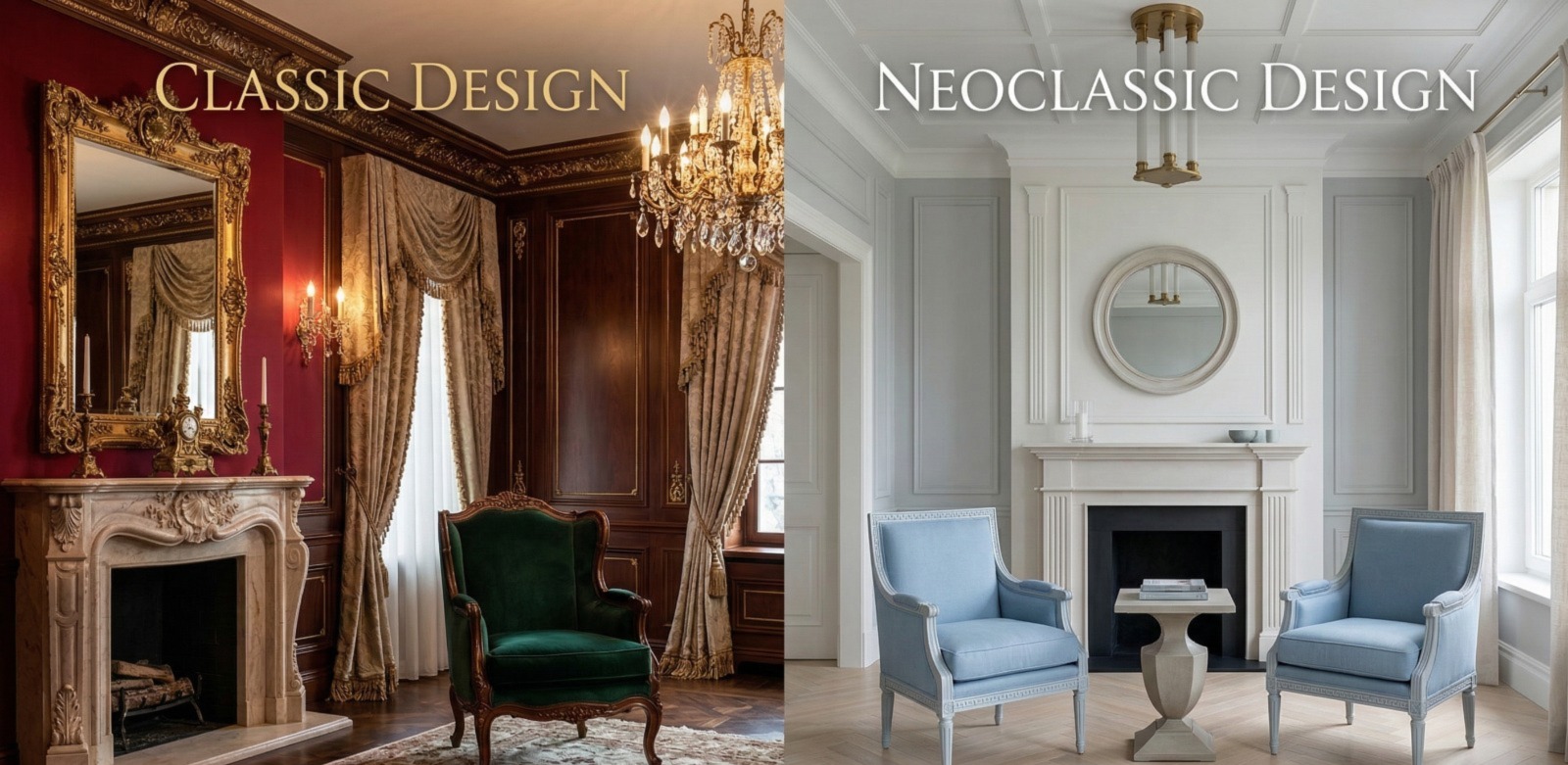
Timeless Elegance: Decoding Classic vs. Neoclassic Interior Design
A guide to recognizing the graceful differences between two timeless interior styles

Interior Design Department
March 8, 2026
If you have ever flipped through an architectural digest or wandered through a historic home, you’ve likely admired both classic and neoclassic design. Because both styles are rooted in history and lean heavily on elegance, the terms are often used interchangeably. However, to a designer’s eye, they represent two distinct eras and completely different philosophies of space.
Whether you are looking to renovate your home or simply brush up on your design history, understanding the distinction between these two iconic styles comes down to a battle between ornate grandeur and symmetrical restraint.
Here is a breakdown of what makes each style unique.
1. Classic Design: The Era of Grandeur
When we talk about 'Classic' interior design (often referred to as 'Traditional' in modern terms), we are usually lumping together several historical European styles, heavily drawing from the Baroque, Rococo, and Victorian eras.
Classic design is not afraid of excess. It is meant to showcase wealth, craftsmanship, and a deep appreciation for the ornate.
Key Characteristics of Classic Design:
Heavy Ornamentation: Furniture features intricate, sweeping carvings. You will see a lot of floral motifs, scrolls, and cabriole (curved) legs on chairs and tables.
Rich Color Palettes: Think deep, dramatic hues. Ruby reds, emerald greens, sapphire blues, and heavy gold accents dominate the space.
Lavish Fabrics: Classic rooms are draped in heavy, luxurious materials like velvet, silk, brocade, and damask.
Substantial Furniture: Pieces are visually heavy, often made from dark woods like mahogany, cherry, or walnut.
The Vibe: Cozy, dramatic, opulent, and incredibly detailed.
2. Neoclassic Design: The Return to Order
Neoclassicism emerged in the mid-to-late 18th century as a direct rebellion against the excessive fluff and fussiness of the Rococo and Baroque periods. Spurred by the rediscovery of the ancient ruins of Pompeii, designers and architects became obsessed with the art and architecture of ancient Greece and Rome.
They wanted to bring back logic, proportion, and grace to interior spaces.
Key Characteristics of Neoclassic Design:
Symmetry and Geometry: Everything is about balance. If there is a chair on one side of the fireplace, there is an identical one on the other. Lines are straighter and more logical.
Muted Color Palettes: Neoclassicism favors low-contrast, calming colors. Think cream, crisp white, pale gray, mustard yellow, and the iconic 'Wedgwood blue.'
Classical Motifs: You will see direct references to antiquity, such as Greek key patterns, urns, columns, pillars, and laurel wreaths.
Refined Furniture: Furniture is lighter and more slender. Instead of curved cabriole legs, you will see straight, fluted legs (mimicking Greek columns). Woods are often lighter or painted.
The Vibe: Airy, sophisticated, balanced, and timelessly elegant.
If a room makes you feel like you are in an opulent 17th-century French palace, you are looking at Classic design. If the room feels like a bright, perfectly balanced modern tribute to an ancient Greek temple, you are looking at Neoclassic design.
- Origins: Baroque, Rococo, Victorian vs. 18th Century Greece/Rome
- Furniture Legs: Curved (Cabriole) vs. Straight, tapered, fluted
- Color Palette: Dark jewel tones vs. Light, muted neutrals
- Fabrics: Heavy velvets/brocades vs. Lighter silks/linens
- Defining Motifs: Florals and scrolls vs. Greek keys and columns
The Takeaway: Understanding these differences helps you choose the approach that resonates with your taste, whether you prefer lavish craftsmanship or measured classical order.