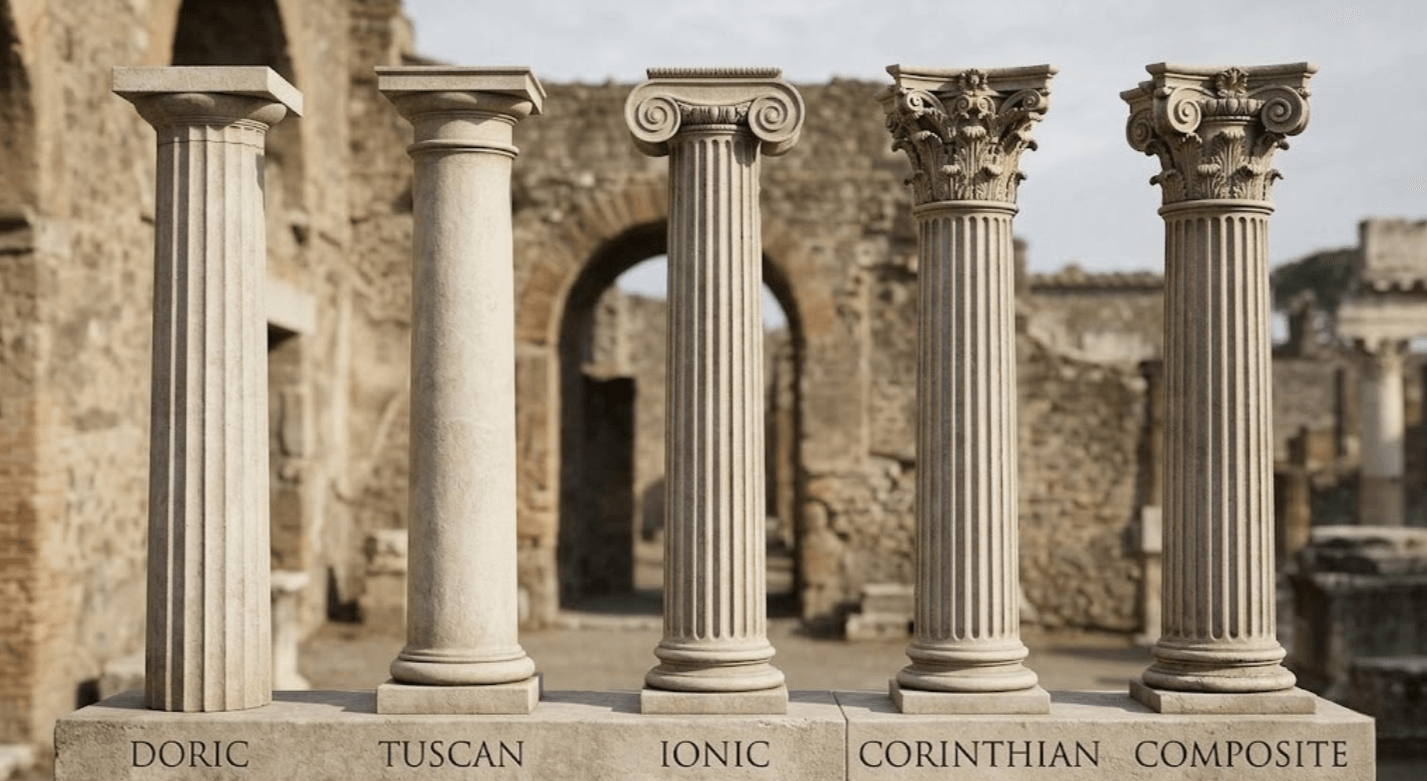
The Pillars of History: A Guide to the Classic Architectural Orders
The Pillars of History

Architecture Department
June 11, 2026
When we admire the grand columns of a courthouse, a museum, or a centuries-old temple, we are often gazing at one of humanity's most enduring design legacies — classical architecture. Rooted in ancient Greece and refined by Rome, this tradition gave us the five architectural orders: Doric, Ionic, Corinthian, Tuscan, and Composite.
But these are not just decorative styles. Each order is a complete system of proportions, from the base of the column to the decorated entablature above. Understanding them is a key to reading the language of classical buildings.
Architecture is frozen music — and the classical orders are its most enduring melody.
Do you have a favorite building in your city that uses these classical styles? Look closely next time you pass a government building, a museum, or even an old bank — you might be surprised by what you find.
The Five Classical Orders
The ancient Greeks developed three fundamental orders, each with its own distinct character and proportional rules. The Romans later added two more, rounding out the classical vocabulary that architects have drawn on for over two thousand years.
- Doric — The oldest and simplest order, recognized by its sturdy columns with no base and a plain, cushion-like capital. It projects strength and solemnity. Famous example: the Parthenon in Athens.
- Ionic — More elegant and slender than Doric, the Ionic order features a distinctive scroll-shaped capital called a volute. Famous example: the Temple of Athena Nike.
- Corinthian — The most elaborate Greek order, adorned with intricate acanthus leaf carvings on the capital and a slender, fluted shaft. Famous example: the Choragic Monument of Lysicrates.
- Tuscan — A Roman invention, essentially a simplified Doric with a smooth shaft and minimal decoration. It conveys rustic simplicity.
- Composite — Also Roman, this order combines the volute scrolls of the Ionic with the acanthus leaves of the Corinthian, creating the most ornate capital of all.
A quick guide to identifying the orders at a glance: a flat, undecorated top means Doric or Tuscan; scrolls on the capital point to Ionic; leafy carvings suggest Corinthian; and a combination of scrolls and leaves means Composite. Once you know these cues, you will find yourself spotting classical orders everywhere — from grand public buildings to the columns on a neighborhood front porch.